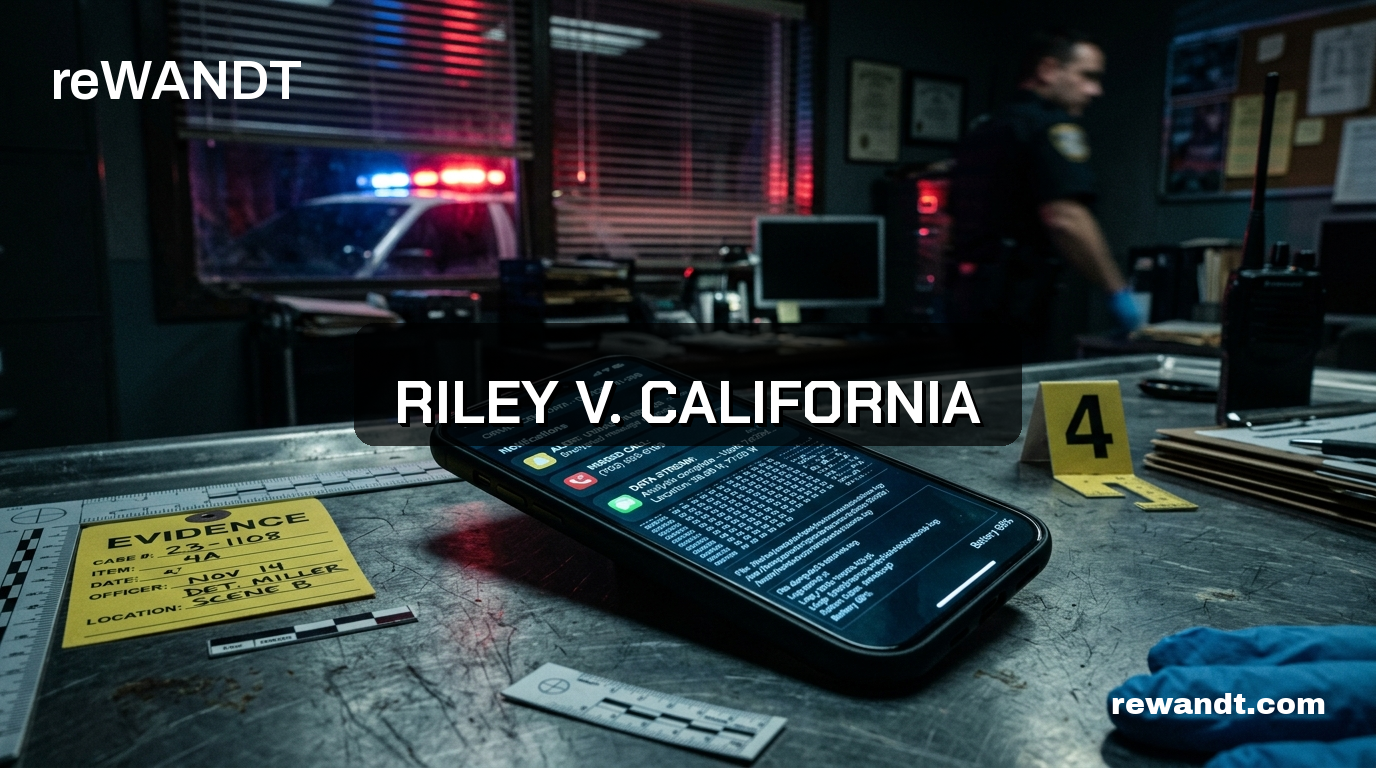
Coming Soon
Scheduled to release on October 23, 2026
The Smartphone as a Safe: Riley v. California & The Digital Fourth Amendment
When police place an individual under arrest, can they search everything on their smartphone without a warrant?
When police place an individual under arrest, can they search everything on their smartphone without a warrant? In 2009, a routine traffic stop in San Diego led to the impoundment of a vehicle, the discovery of concealed firearms, and the arrest of David Leon Riley. Incident to that arrest, police seized his smartphone and scrolled through his private text messages, contacts, and photo galleries without a search warrant—uncovering digital evidence that prosecutors used to secure a conviction for attempted murder and a sentence of fifteen years to life. When the case reached the Supreme Court of the United States, prosecutors argued that a smartphone is no different from a crumpled pack of cigarettes found in an arrestee's pocket. In this episode of reWandt, we examine the landmark 2014 Supreme Court decision Riley v. California (573 U.S. 373). Unpack how Chief Justice John Roberts and a unanimous high court rejected the container analogy, dismantled the Search Incident to Arrest doctrine for digital devices, and established the categorical bright-line rule: 'get a warrant.' Explore why modern cell phones differ quantitatively and qualitatively from any physical container in history, and discover why this foundational ruling remains the indispensable shield protecting the intimate financial, medical, and private digital communications that power everyday modern life. Explore more deep dives at https://reWandt.com #reWandt #CyberLaw #DigitalPrivacy --- *Disclaimer: Assembled by AI from Professor Wandt's lectures and research; this overview may not reflect his exact views or wording.*
Key Takeaways & Core Ideas
- ▪AI-narrated transformation
- ▪Source-connected material analysis
Source Excerpt
"When police place an individual under arrest, can they search everything on their smartphone without a warrant?"
Related Episodes & Topics
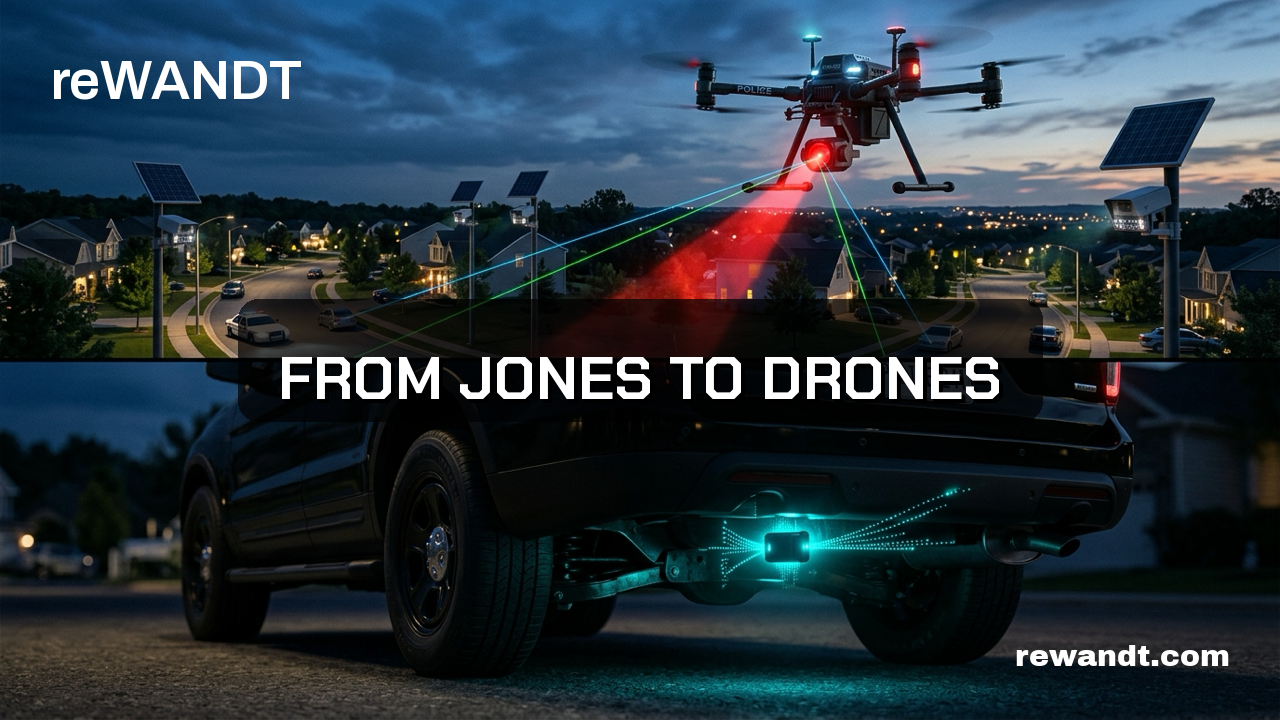
From Jones to Drones: The Fight to Restrain Law Enforcement Tech
In the quarter-century since September 11, American policing transformed into a high-tech surveillance powerhouse—from military thermal imagers and GPS beacons to geofences and AI-powered cameras. But every time law enforcement rushes into an unregulated technological frontier, the Supreme Court has had to pull the reins. Today, as Flock license plate cameras map whole cities and police drones take to the skies, has technology finally outpaced the Constitution? In this episode of reWandt, we trace the post-9/11 evolution of law enforcement technology and the continuous constitutional tug-of-war between police power and civil liberties. We walk through the five landmark decisions where the Supreme Court intervened to protect citizens: Kyllo (thermal imaging), Jones (GPS tracking), Jardines (curtilage), Riley (cell phones), and Carpenter (cell-site location tracking). Then, we confront the two newest unregulated frontiers: Flock Safety's nationwide AI automated license plate reader (ALPR) cloud network and autonomous police drone fleets. Can 1980s public-road and airplane flyover cases justify a 2026 digital panopticon? Explore more deep dives at https://reWandt.com #reWandt #FourthAmendment #SurveillanceState --- *Disclaimer: Assembled by AI from Professor Wandt's lectures and research; this overview may not reflect his exact views or wording.*
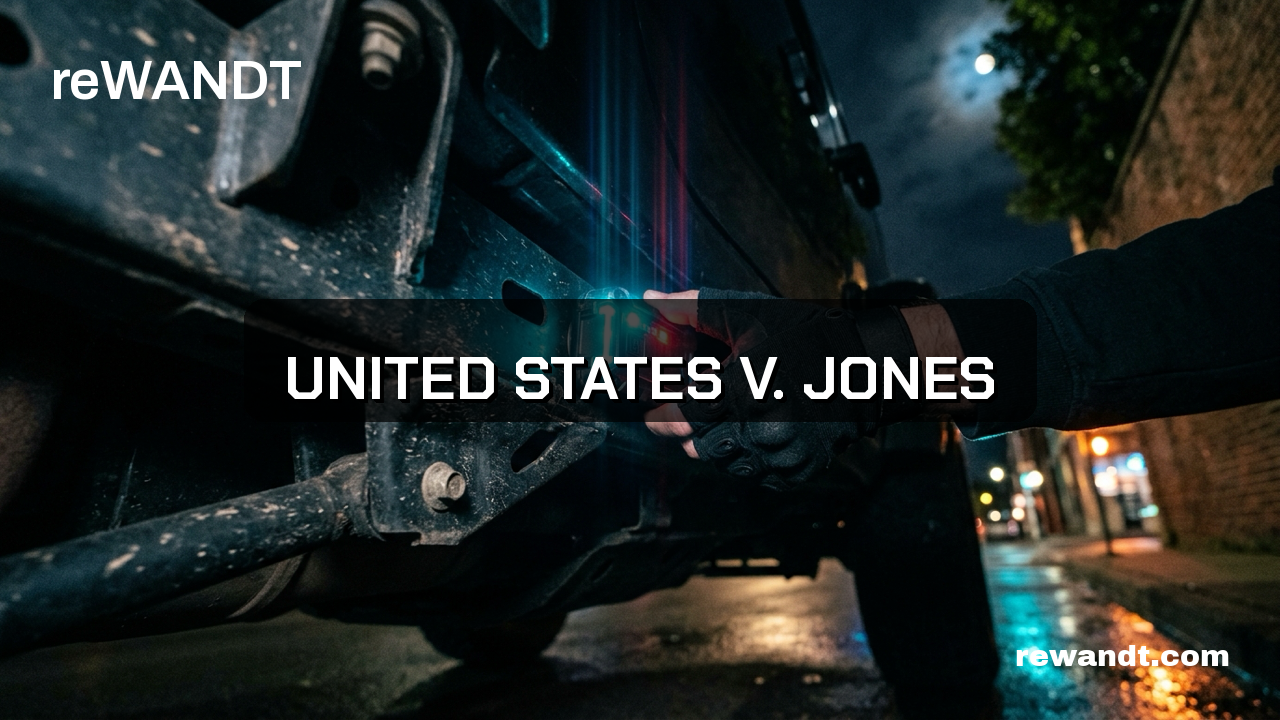
The Midnight Magnet: United States v. Jones & The Digital Fourth Amendment
If the police secretly crawl beneath your car in the middle of the night and attach a magnetic GPS tracking beacon, have they violated your constitutional rights—and how did an 18th-century property rule written for horses and carriages reshape modern digital privacy? In 2004, federal agents investigating nightclub owner Antoine Jones covertly attached a GPS receiver to his Jeep and tracked his movements 24/7 for 28 continuous days. The surveillance yielded over 2,000 pages of tracking logs, leading to a stash house with 97 kilograms of cocaine and a life sentence. But because police violated the terms of their warrant, the case escalated to the Supreme Court. In this episode of reWandt, we deconstruct the landmark ruling United States v. Jones (565 U.S. 400). Explore how Justice Antonin Scalia stunned legal scholars by reviving 18th-century English common law trespass to rule that automobiles are protected 'effects.' We dissect Justice Samuel Alito's 'Mosaic Theory' of prolonged surveillance and Justice Sonia Sotomayor's prophetic concurrence attacking the Third-Party Doctrine. Finally, we examine the chilling reality of 2026: why police no longer need to touch your car when automakers and data brokers harvest your real-time vehicle telematics around the clock. Explore more deep dives at https://reWandt.com #reWandt #FourthAmendment #PrivacyLaw --- *Disclaimer: Assembled by AI from Professor Wandt's lectures and research; this overview may not reflect his exact views or wording.*
The Virtual Dragnet: Chatrie v. United States & Geofence Warrants
Can police draw a virtual circle on a map and demand that tech companies identify every person inside? Following an unsolved 2019 bank robbery in Midlothian, Virginia, detectives drew a 150-meter circular geofence covering 17.5 acres—sweeping up a church, residential homes, and public streets—and served a reverse location warrant on Google's proprietary Sensorvault database. Instead of investigating a suspect to search their property, the warrant inverted the Constitution by investigating a geographic territory to unmask anyone who stepped inside. In this episode of reWandt, we examine the landmark 2026 Supreme Court decision Chatrie v. United States. Explore how Justice Elena Kagan and a 6-3 high court held that accessing an individual's Google Location History via a geofence warrant constitutes a search under the Fourth Amendment, why the third-party doctrine cannot justify digital dragnet policing, and how this historic ruling protects over a billion smartphone users from modern general warrants in everyday life. Explore more deep dives at https://reWandt.com #reWandt #GeofenceWarrant #DigitalPrivacy --- *Disclaimer: Assembled by AI from Professor Wandt's lectures and research; this overview may not reflect his exact views or wording.*