reWandt

AI-narrated technology, cyber, policy, and investigative storytelling built from the lectures, research, and ideas of Professor Adam Scott Wandt.

Featured Spotlight

The latest deep dive into emerging technology, artificial intelligence, and investigations.

New here? Start at Episode 1→
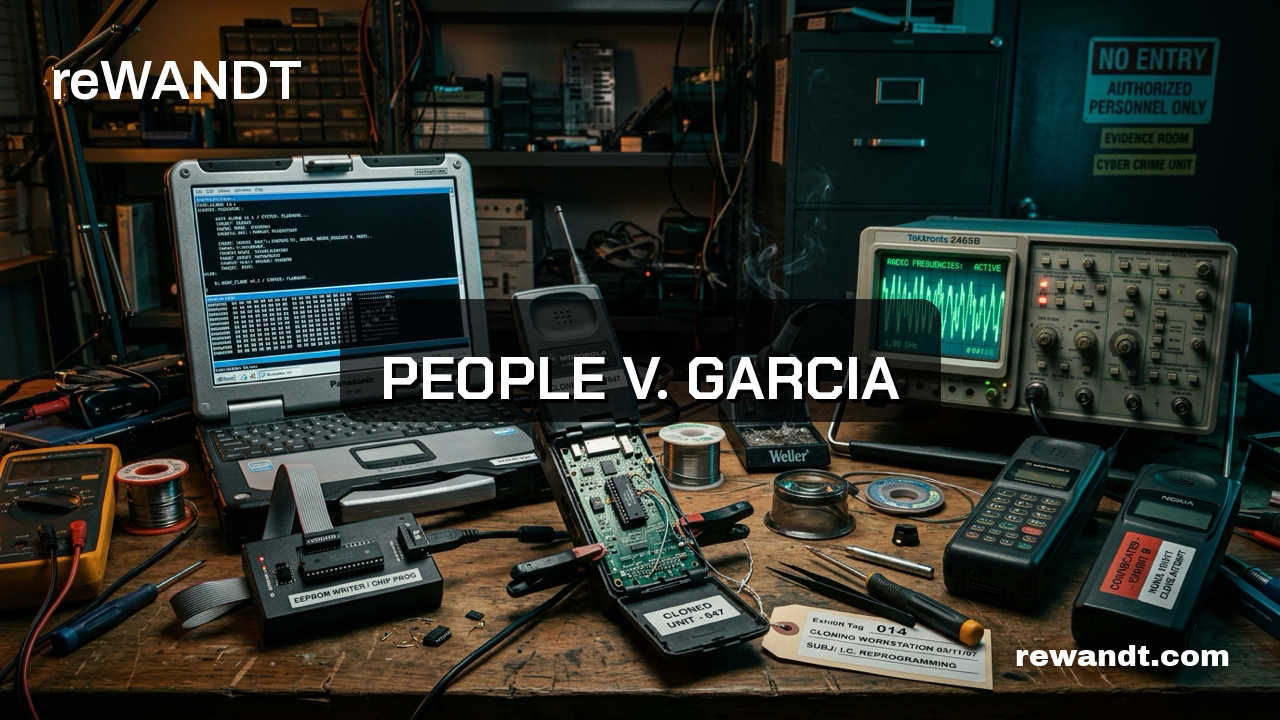
Burglar's Tools in the Airwaves: People v. Garcia & The Cellular Cloning Era
Ep 23
People v GarciaBurglar's tools

Burglar's Tools in the Airwaves: People v. Garcia & The Cellular Cloning Era

Can a radio scanner, a cassette recorder, and a reprogrammed microchip be classified under the law as burglar's tools alongside crowbars and lockpicks? In the mid-1990s, the analog cellular network ran on unencrypted radio frequencies. Criminal rings recognized that anyone with a modified scanner could harvest Electronic Serial Numbers (ESNs) and Mobile Identification Numbers (MINs) from the air and burn them onto cloned mobile handsets. When Westchester County authorities arrested Victor Garcia, Rafael Morel, and Kennedy Tabares for operating a sophisticated mobile cloning rig, prosecutors charged them with Possession of Burglar's Tools under New York Penal Law Section 140.35. The defense claimed burglar's tools were physical implements for breaking into physical buildings—not electronic devices capturing invisible radio waves. In this episode of reWandt, Professor Adam Scott Wandt examines People v. Garcia (170 Misc. 2d 543). We explore how the court adapted century-old burglary statutes to the digital age, why reprogrammed chips and scanners are classified as modern criminal instrumentalities, and how this decision protects your daily life—from shielding your car against keyless relay theft to protecting contactless credit cards and wireless devices from invisible digital break-ins. Explore more deep dives at https://reWandt.com #reWandt #CyberLaw #HardwareHacking

Watch EpisodeOct 15, 2026

What is reWandt?

reWandt is a digital media series built to bring emerging technology, cybersecurity, digital investigations, public policy, and AI-driven change to a broader audience through fast, accessible, high-impact episodes.

Why it matters

The technologies reshaping society should not be discussed only behind closed doors. reWandt opens those conversations to a wider audience.
Latest Episodes

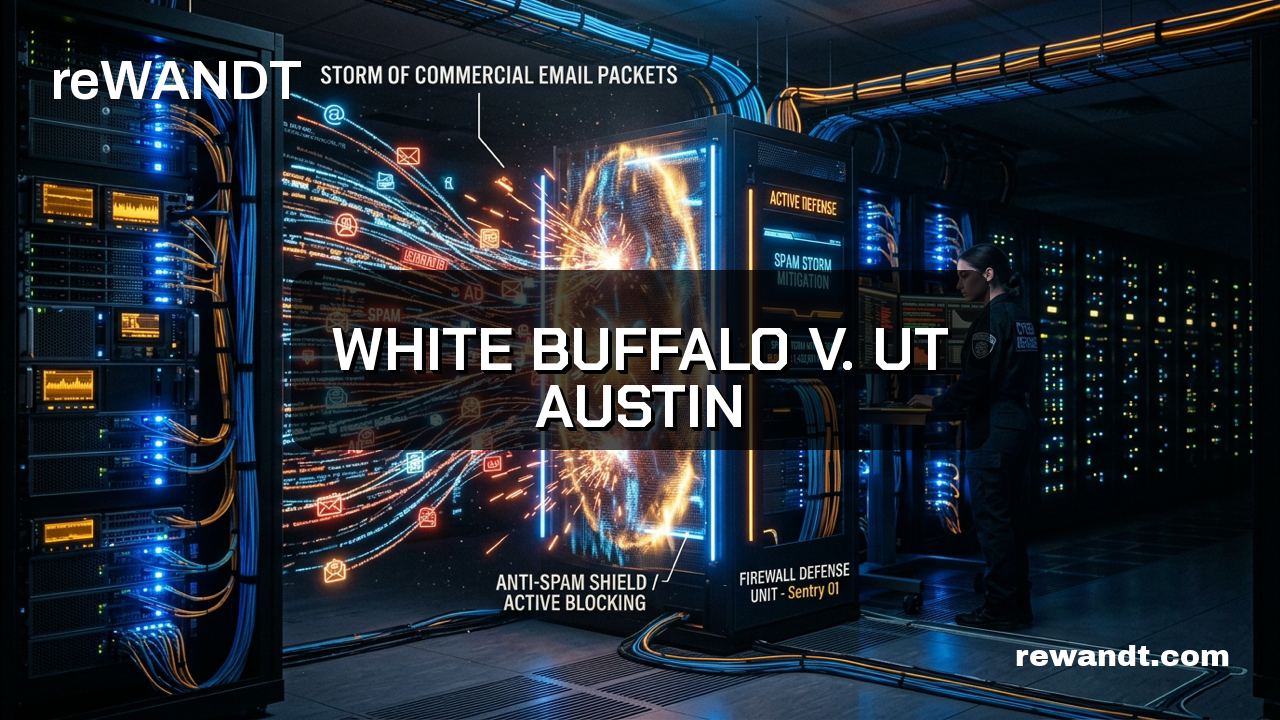
The Spam Wars: White Buffalo v. UT Austin & The Right to Block
Ep 22
White Buffalo VenturesCAN-SPAM Act

The Spam Wars: White Buffalo v. UT Austin & The Right to Block

Can a public institution block commercial email from reaching its servers, or does the First Amendment protect the right of private companies to flood your inbox? In the early 2000s, an online dating company called White Buffalo Ventures sent thousands of unsolicited bulk commercial emails to students and faculty at the University of Texas at Austin. When university network administrators deployed automated IP filters and blocked the company's mail servers, White Buffalo filed a federal civil rights lawsuit. They claimed that the university violated their First Amendment rights and that the federal CAN-SPAM Act of 2003 preempted the university from blocking commercial speech. In this episode of reWandt, Professor Adam Scott Wandt examines the landmark Fifth Circuit Court of Appeals decision White Buffalo Ventures, LLC v. University of Texas at Austin (420 F.3d 366). We unpack how the court applied the Central Hudson commercial speech doctrine, why public universities have the legal rights of an Internet Access Provider under federal law, and how this decision protects your everyday digital sanity by empowering the modern spam filters and enterprise firewalls you rely on every hour. Explore more deep dives at https://reWandt.com #reWandt #CyberLaw #NetworkSecurity

Watch EpisodeOct 8, 2026
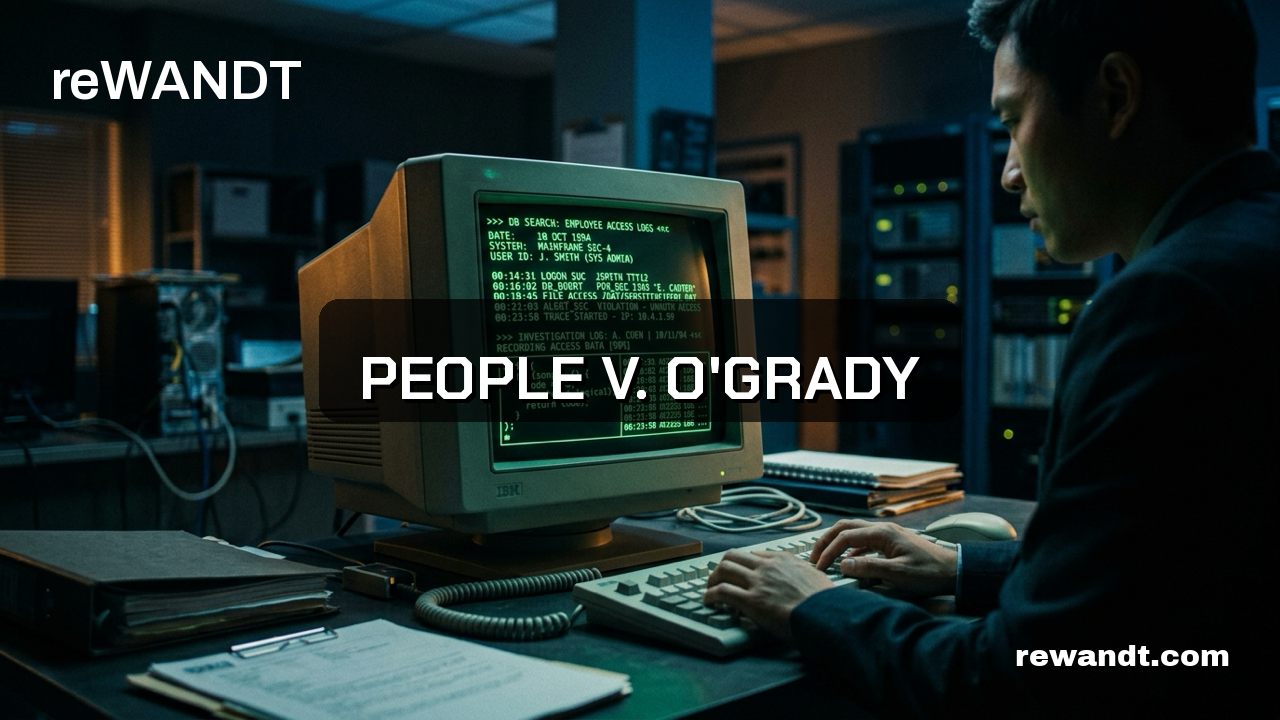
The Spy in the Statehouse: People v. O'Grady & Insider Cyber Trespass
Ep 21
People v O'GradyNY Penal Law 156.10

The Spy in the Statehouse: People v. O'Grady & Insider Cyber Trespass

If an employee holds legitimate, authorized login credentials to a confidential government database, can using those exact same credentials to search private records make them guilty of criminal trespass? In August 1996, a personal feud in upstate New York spilled over into the New York State Department of Taxation and Finance. An employee used her personal terminal credentials to run unauthorized queries against the confidential tax profiles of her sister's romantic rival and family members. When indicted for felony Computer Trespass under New York Penal Law Section 156.10, she mounted a vigorous defense: her credentials were valid, and the state had no eyewitness proving she was the one typing at the keyboard. In this episode of reWandt, Professor Adam Scott Wandt examines People v. O'Grady (263 A.D.2d 616). We explore how the New York courts defined the scope of authorization, how circumstantial digital audit trails establish criminal attribution beyond a reasonable doubt, and how this landmark ruling acts as the vital legal shield protecting your personal medical, financial, and tax privacy from rogue corporate and government insiders in everyday modern life. Explore more deep dives at https://reWandt.com #reWandt #CyberLaw #DigitalForensics

Watch EpisodeOct 1, 2026
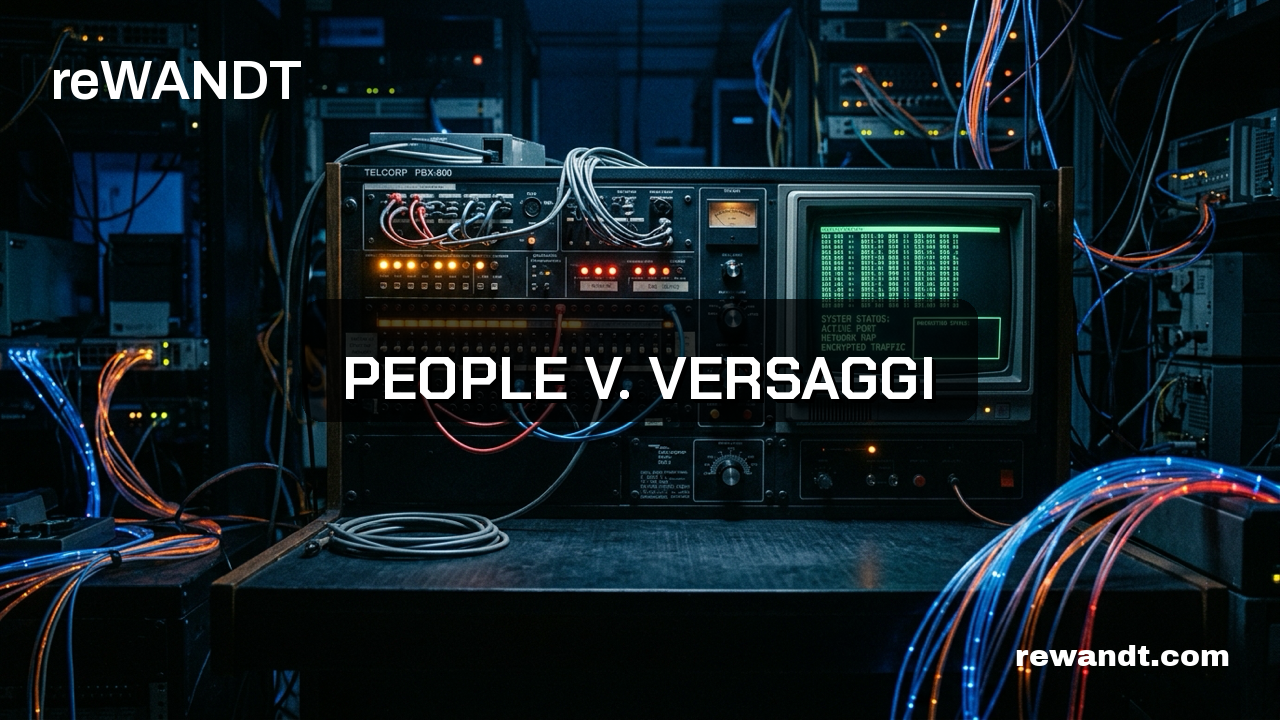
Code as Conduct: People v. Versaggi & The Birth of Computer Tampering Law
Ep 20
People v VersaggiNY Penal Law 156

Code as Conduct: People v. Versaggi & The Birth of Computer Tampering Law

Can you commit criminal computer tampering without ever changing a single byte of code? In November of 1986, an off-duty technician dialed into the private telecommunications network of the Eastman Kodak Corporation from his home terminal. Within minutes, phone service went dark across a 20,000-acre industrial complex, severing internal communications and silencing emergency 911 lines. When prosecutors charged him with felony computer tampering under New York's newly enacted Penal Law Article 156, the defense made an extraordinary claim: not a single byte of code on disk had been altered, deleted, or corrupted. He had merely executed the system's own built-in administrative commands. In this episode of reWandt, Professor Adam Scott Wandt examines the landmark New York Court of Appeals decision People v. Versaggi, 83 N.Y.2d 123 (1994). We unpack how the court defined software not as static storage on disk, but as dynamic conduct in execution. Explore how Versaggi's dial-up sabotage of Northern Telecom SL-100 switches exposed the inadequacy of traditional property laws, led to the birth of modern computer tampering jurisprudence, and established the legal armor protecting the critical infrastructure—from power grids to 911 dispatch—that our everyday modern lives depend on. Explore more deep dives at https://reWandt.com #reWandt #CyberLaw #DigitalForensics

Watch EpisodeSep 21, 2026

Quick Takes & Lectures

Special drops, deep dives, and out-of-band updates

Quick Take: The Layers of a Tap (NFC and Digital Footprints)
Quick Take 22
NFCCybersecurity

Quick Take: The Layers of a Tap (NFC and Digital Footprints)

What actually happens in the split second when a modern smartphone, credit card, or security badge taps a digital reader? Professor Wandt breaks down the layers of a tap. Learn how Near Field Communication (NFC) operates, the security of payment tokenization, and how these split-second interactions generate permanent digital footprints. Join the conversation at https://reWandt.com #reWandt #Cybersecurity #TechEducation

Watch EpisodeSep 21, 2026
Quick Take: The Invisible Infrastructure (Bluetooth & BLE Security)
Quick Take 21
BluetoothBLE

Quick Take: The Invisible Infrastructure (Bluetooth & BLE Security)

Bluetooth functions as a specialized short-range wireless system, architected specifically for low-power, rapid device discovery, and controlled radio hopping. Professor Wandt breaks down the invisible infrastructure of Bluetooth and BLE. Learn how your devices survive in a chaotic radio environment using adaptive frequency hopping and why paired status doesn't automatically guarantee security. Explore more deep dives at https://reWandt.com #reWandt #Bluetooth #TechEducation

Watch EpisodeSep 14, 2026
Quick Take: The Invisible Destination (The Security of QR Codes)
Quick Take 20
QrcodeCybersecurity

Quick Take: The Invisible Destination (The Security of QR Codes)

What exactly happens after you've scanned a QR code and who gets to decide where it takes you? Professor Wandt breaks down the mechanics of "quishing" (QR phishing). Learn why trading visibility for speed creates a massive blind spot, and how attackers exploit the physical trust we place in our everyday surroundings. Explore more deep dives at https://reWandt.com #reWandt #Qrcode #TechEducation

Watch EpisodeSep 7, 2026
Professor Adam Scott Wandt

Professor Adam Scott Wandt

Professor Adam Scott Wandt is a tenured Associate Professor of Public Policy and Deputy Chair for Technology at John Jay College of Criminal Justice. A New York attorney, educator, and researcher, his work focuses on the intersection of law, policy, security, and digital investigations, with particular emphasis on artificial intelligence, cybersecurity, OSINT, surveillance, privacy, cryptocurrency, darknet markets, and other emerging technologies shaping public safety and modern institutions.

Read Full Bio

Follow reWandt

Join the conversation on your preferred platform.

YouTube

Official Series Channel

Follow on YouTube

TikTok

Official Series Account

Follow on TikTok

Instagram

@prof_wandt (Personal)

Follow on Instagram