Coming Soon
Scheduled to release on January 8, 2027
Steel, Status, and Patronage: Arms and Armor in Society
That gleaming suit of medieval knight's armor in a museum gallery often hides a secret. Many were cobbled together centuries later from mismatched parts. Can a viewer really trust what appears on display?
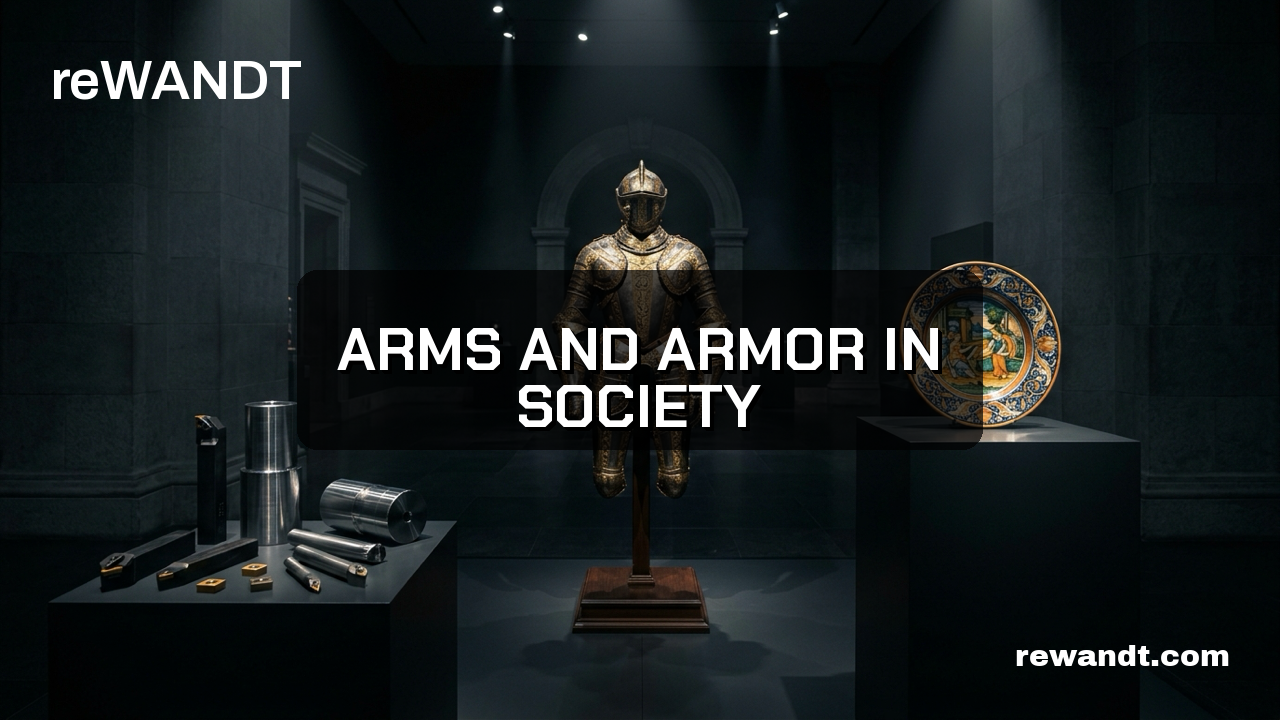
That gleaming suit of medieval knight's armor in a museum gallery often hides a secret. Many were cobbled together centuries later from mismatched parts. Can a viewer really trust what appears on display? In this episode of reWandt, we investigate the technology, patronage, and museum afterlife of historical arms, armor, and Renaissance ceramics. We explore how to separate direct visual observation from curatorial attribution using collections from the Metropolitan Museum of Art—including composite medieval Armor (29.154.3), Kunz Lochner's 1549 Armor of Emperor Ferdinand I (33.164a–x), and the Renaissance maiolica Plate with the Story of King Midas (1975.1.1019). Pairing Simon Winchester's account of Henry Maudslay's precision lathe in The Perfectionists with Thomas Misa's analysis of Renaissance court engineering in Leonardo to the Internet—plus curator Dirk H. Breiding's research debunking popular myths about medieval armor weight and mobility—we uncover how steel and clay served both practical function and dynastic power. Explore more deep dives at https://reWandt.com #reWandt #ArmsAndArmor #HistoryOfTechnology --- *Disclaimer: Assembled by AI from Professor Wandt's lectures and research; this overview may not reflect his exact views or wording.*
Key Takeaways & Core Ideas
- ▪Observation vs. Attribution: Direct visual inspection reveals motifs, joints, and wear, whereas dates, makers, alloy composition, and provenance require documentary or technical research.
- ▪The Afterlife of Museum Objects: Records like The Met's composite medieval Armor (29.154.3) demonstrate how collection, restoration, and reassembly shape modern gallery displays.
- ▪Period-Conscious Lenses: Pairing Simon Winchester (Maudslay's repeatable lathe) with Thomas Misa (Renaissance court patronage) connects how objects were made with why patrons commissioned them without erasing historical era boundaries.
- ▪Cross-Material Patronage & Myth-Busting: Comparing the Armor of Emperor Ferdinand I (33.164a–x) with the King Midas Plate (1975.1.1019) illuminates elite status and function, while Dirk H. Breiding's curatorial research refutes myths of immobile 100-pound knights.
Source Excerpt
"That gleaming suit of medieval knight's armor in a museum gallery often hides a secret. Many were cobbled together centuries later from mismatched parts. Can a viewer really trust what appears on display?"
Related Episodes & Topics
Hands, Heat, and History: Clay, Craft, and Material Culture
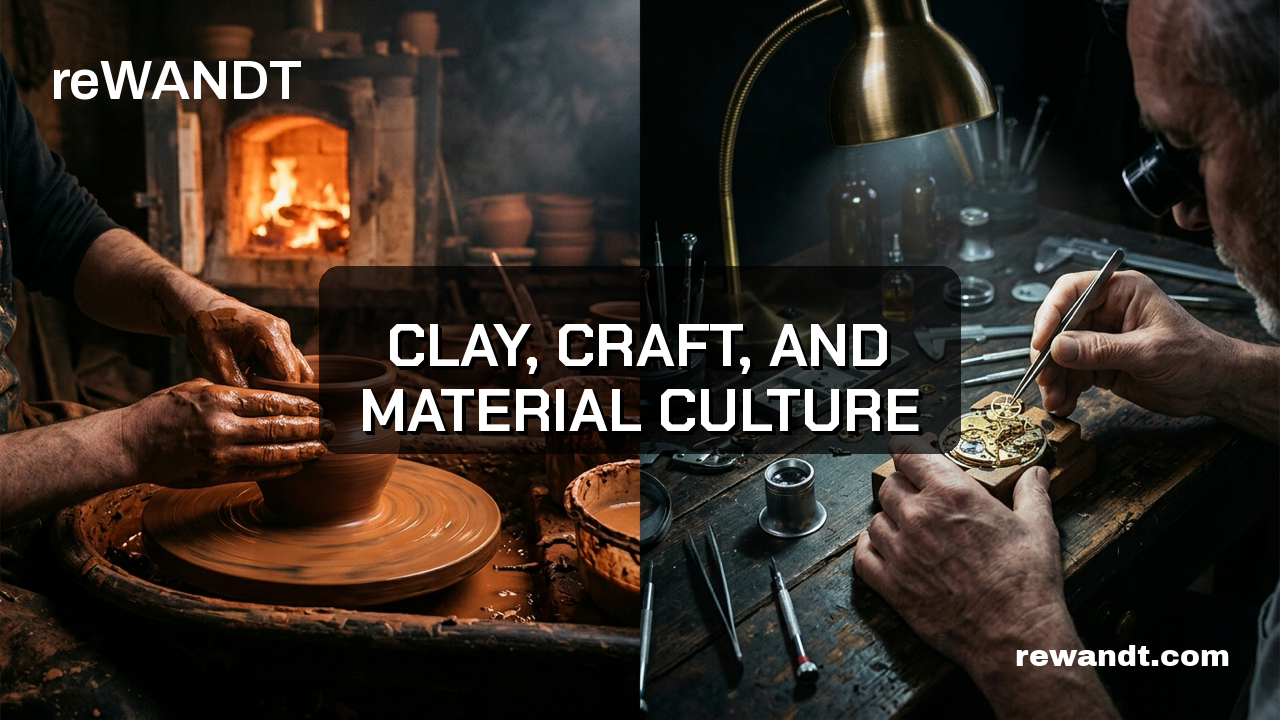
Modern engineering worships laser-guided precision, yet master watchmakers still finish parts by hand, just like ancient potters shaping wet clay. How did raw earth and human touch build modern civilization? In this episode of reWandt, we explore the science and history of ceramics, craft, and material culture. We examine why wet forming, drying, and high-temperature firing represent distinct physical thresholds, and how systematic qualitative observation captures maker decisions without inventing artificial numbers. Pairing Simon Winchester's account of master watchmakers in The Perfectionists with Thomas Misa's analysis of technical traditions in Leonardo to the Internet, we trace how hand craft and precision coexist, how functional design shapes vessels from sorting trays to liquid carriers, and how curatorial scholarship at the Metropolitan Museum of Art—such as Caitlin Reddington Davis's record for the ancient Mesoamerican Bowl (Tecomate)—builds inspectable historical knowledge. Explore more deep dives at https://reWandt.com #reWandt #MaterialCulture #HistoryOfTechnology --- *Disclaimer: Assembled by AI from Professor Wandt's lectures and research; this overview may not reflect his exact views or wording.*

From Spark to System: Fire and the Control of Energy
In one trial, a novice working a friction spindle produces no ember. Meanwhile, an experienced operator clicks a mechanical lighter, instantly producing a steady flame. In this episode of reWandt, we examine how raw energy becomes a dependable human capability. By separating empirical observation from inference and explanation, we explore the thermodynamics of ignition versus sustained combustion and apply the dual lenses of Simon Winchester's The Perfectionists and Thomas Misa's Leonardo to the Internet. From Smithsonian archaeological hearth records to modern community resilience during supply interruptions, discover why no technology is truly effortless—and how engineering tolerances, embodied skill, supply chains, and the ethics of the common good govern our control of energy. Explore more deep dives at https://reWandt.com #reWandt #HistoryOfTechnology #EnergySystems --- *Disclaimer: Assembled by AI from Professor Wandt's lectures and research; this overview may not reflect his exact views or wording.*